
BOOKS
Books by Colin S. Levy
Legal technology and AI are changing what lawyers need to know and how they actually do their jobs. These books give you the practical foundation to work through that shift with confidence.
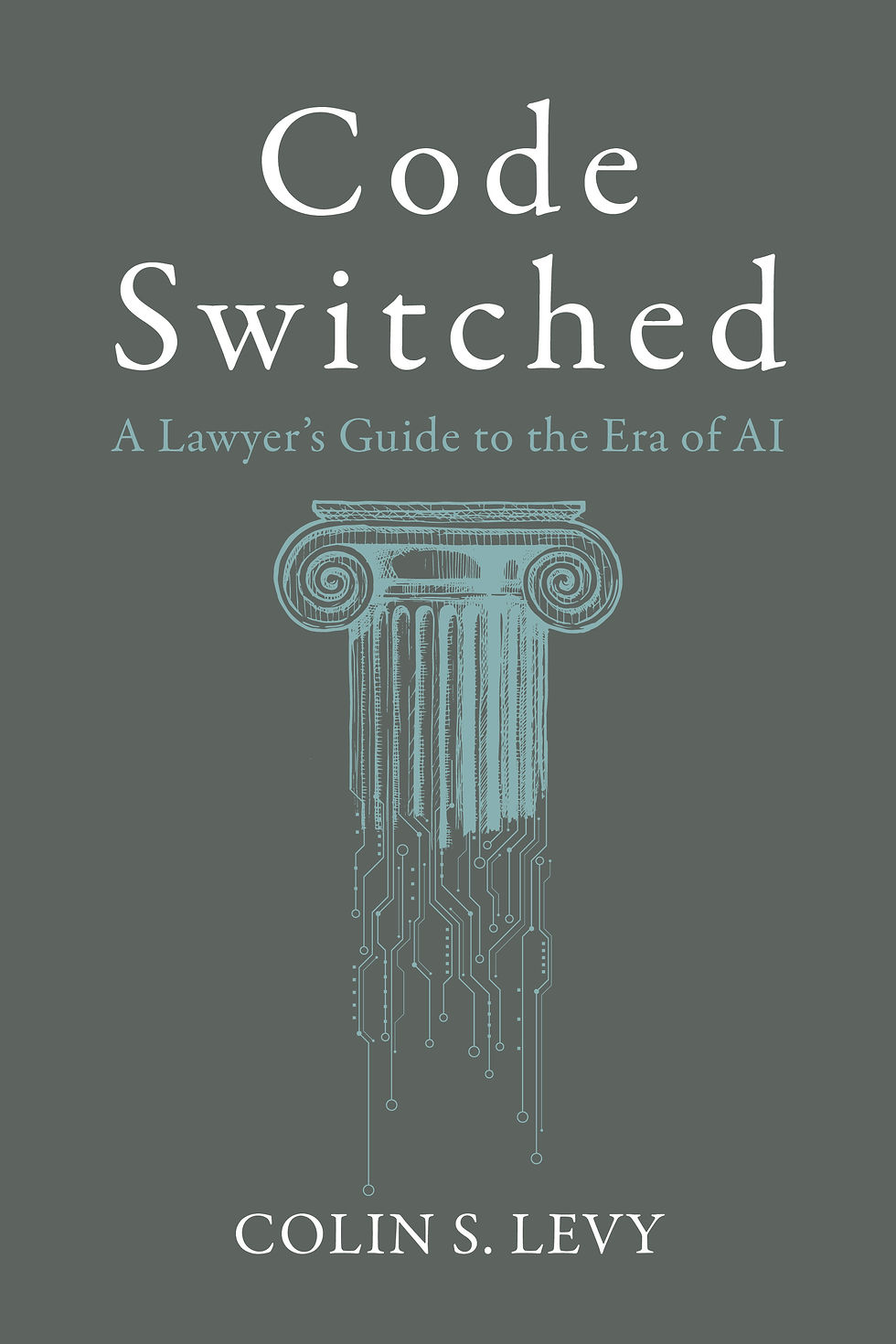
PRE-ORDER: A Lawyer's Guide to the Era of AI
CODE SWITCHED
AI is becoming embedded into our professional lives more and more. I wrote Code Switched to give you a clear account of what these tools do and how you can use them alongside your judgment and experience.
Q1. What is this book about?
I look at how lawyers are actually using AI day to day, what adoption costs and what it returns, and where the ethical lines sit. I draw on years working across law firms, in-house teams, and the legal technology industry. Bjarne Tellmann, former General Counsel of Pearson plc, GSK Consumer Healthcare, and Haleon, wrote the foreword.
Q2. Who is this book for?
Lawyers at large firms, solo lawyers, in-house counsel, legal ops teams, and law students. If you want a straight read on what AI changes and what it does not, and you have had enough of the hype, start here.
Q3. How will this book help me?
You will learn where AI fits into your daily work, how to weigh the economics and ethics of using it, and how to start without disrupting your practice. The goal is not to hand your work to a machine. It is to clear away enough of the routine that you can spend your time on the judgment clients hire you for.

Innovation, Advancement & the Future of Law Practice
THE LEGAL TECH ECOSYSTEM
Most lawyers know they should care about legal tech but lack a clear, vendor‑neutral map of the landscape. The Legal Tech Ecosystem is that map: a strategic guide to how technology, data, and innovation are reshaping legal work and what that means for you.
Q1. What is this book about?
The Legal Tech Ecosystem explains how technology is transforming core legal workflows such as data management, e‑discovery, contract management, research, and process improvement, and shows how these pieces fit into a broader innovation story. It blends clear overviews with real examples and insights from leading legal tech practitioners so you can see both the big picture and how it plays out in practice.
Q2. Who is this book for?
This book is for lawyers, in‑house counsel, legal ops professionals, and law students who want to speak credibly about legal tech without buying into hype. If you are navigating change, advising clients, or helping your organization modernize, this book gives you a shared language and framework for those conversations.
Q3. How will this book help me?
You will come away with a clearer understanding of the main categories of legal tech, how they interact, and which trends actually matter for your work. You will be better able to separate durable shifts from buzzwords, identify realistic opportunities in your context, and participate more confidently in decisions about tools, workflows, and innovation.

A practical guide for legal professionals
HANDBOOK OF LEGAL TECH
Once you understand the big picture, you still need to decide which tools to use and how to implement them. Handbook of Legal Tech is your practical companion for that work.
Q1. What is this book about?
Handbook of Legal Tech brings together leading experts to explain how specific technologies are being used to improve legal practice today. Each chapter focuses on a key area, including automation, contract lifecycle management, AI, legal analytics, e‑discovery, document automation, and more, and offers first‑hand insight into effective use cases and adoption.
Q2. Who is this book for?
This handbook is aimed at in‑house lawyers, private practice lawyers, and legal operations professionals who want concrete, experience‑based guidance on choosing and using legal technology. It is especially useful if you are evaluating vendors, scoping projects, or responsible for improving how legal work gets done in your organization.
Q3. How will this book help me?
The book helps you move from abstract talk about “innovation” to grounded decisions about specific tools and workflows. You get practical advice on when different technologies make sense, what pitfalls to avoid, and how to approach issues such as ethics, data, and change management so that legal tech enhances your work instead of complicating it.
.jpg)
The Legal Tech Ecosystem
Innovation, Advancement
& the Future of Law Practice
The Legal Tech Ecosystem addresses the pressures reshaping legal departments: regulatory complexity, globalization challenges, and demands to do more with less. This accessible guide shares insights from legal technology leaders and practitioners. The book tackles the cultural and organizational factors that determine whether technology adoption succeeds or fails. Learn why legal technology enhances rather than replaces legal practice, how to lead digital transformation with a people-first approach. Whether you're at a law firm, legal department, or law school, this roadmap helps you understand where legal technology is today and implement it effectively tomorrow.
Handbook of Legal Tech
A practical guide
for legal professionals
Handbook of Legal Tech brings together leading experts to demystify legal technology for lawyers who find it overwhelming or intimidating. As editor, I curated expert chapters covering automation, contract lifecycle management, blockchain, artificial intelligence, and legal analytics. Each contributor provides first-hand insights into how their technology area is being developed, adopted, and best deployed in legal practice. The book's structure lets you read cover-to-cover for comprehensive understanding or focus on specific chapters addressing your immediate technology needs.